
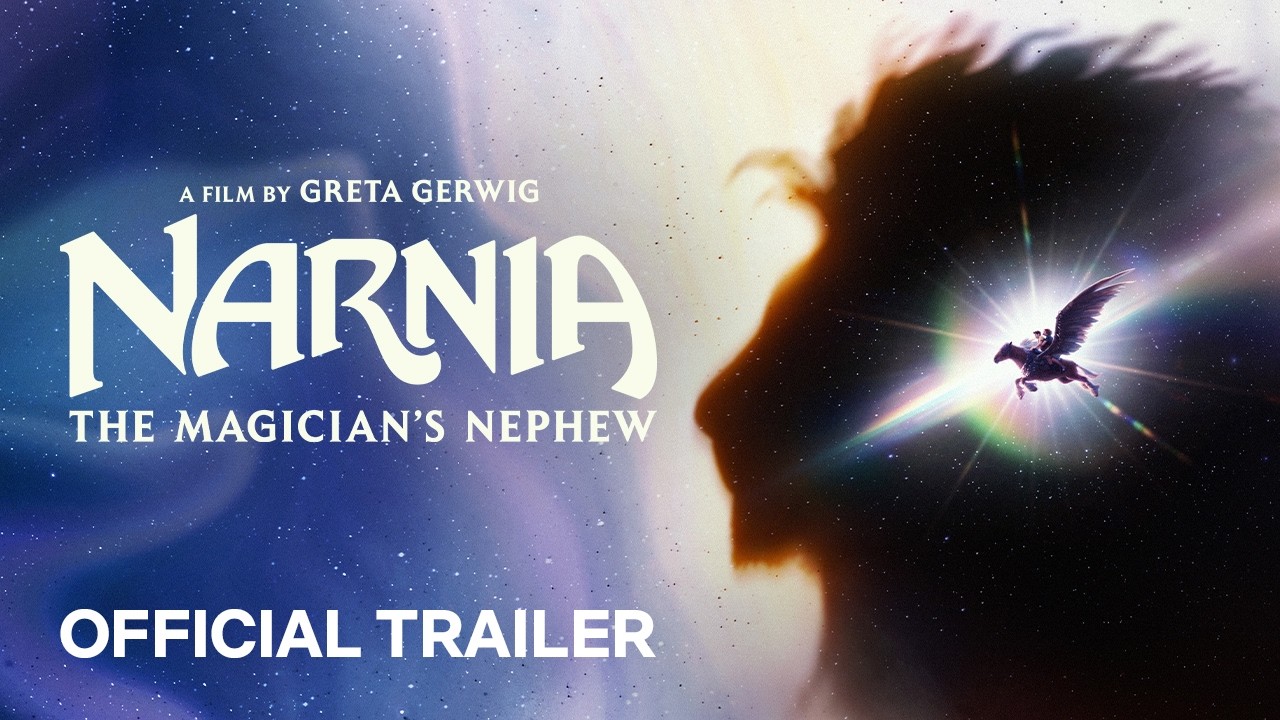
In February 2027, a film arrives in cinemas that is interesting for three different reasons. Narnia: The Magician's Nephew is Greta Gerwig's first film since Barbie. It is a new attempt to revive C. S. Lewis' Narnia as a film series. And it is Netflix's biggest experiment yet with traditional theatrical distribution.

Background: Narnia's faded first attempt
When The Chronicles of Narnia: The Lion, the Witch and the Wardrobe opened in 2005, Narnia looked set to rise alongside The Lord of the Rings films and Harry Potter. The first film was a big success. The second, Prince Caspian (2008), performed below expectations, however, and Disney dropped the series. The third, The Voyage of the Dawn Treader (2010), was made with another studio, and after that the series fell silent.
Netflix bought the Narnia rights in 2018 with the aim of building a broad slate of films and series. After a long silence, The Magician's Nephew, written and directed by Greta Gerwig, was chosen as the first film of that slate.
Why The Magician's Nephew?
The choice is bold. The Magician's Nephew is the strangest of the Narnia stories. It does not begin with a wardrobe or the Pevensie children, but in early 20th-century London, in an attic, with a malicious magician and magic rings. The story's climax is not a battle but a creation story: Aslan sings the world of Narnia into existence.
In our estimate, Gerwig's choice has three justifications. First, the story is chronologically the first, making it a natural start for a new series. Second, it is the only Narnia story that has never been filmed, so comparisons with the previous film series remain limited. Third, the story suits Gerwig's strengths: it is silly, philosophical and emotional all at once.
Rock'n'roll Narnia
Gerwig has said in interviews that her Narnia was influenced by British rock of the 1960s and 70s. The director describes Narnia as literally a world made of music, because Aslan sings it into existence. In her view, rock'n'roll therefore felt like a natural way to portray it.
This is clearly visible in the trailer. Led Zeppelin's Stairway to Heaven plays in the background, and Emma Mackey's Jadis is a theatrical, almost rock-opera-like figure. The music was composed by Mark Ronson and Andrew Wyatt, who also worked with Gerwig on Barbie.
The style is likely to spark debate. Fans of Lewis' books are used to a more traditional fairy-tale world, and some will find a rock-inflected interpretation alien. Others see in it exactly what the film series needs: a voice of its own. We lean towards the latter, but the final verdict depends on whether the style serves the story or remains a superficial gimmick.
The cast: Craig, Mackey and Streep's Aslan
The film's casting choices are as interesting as its style. Daniel Craig plays Uncle Andrew, the magician of the book's title. The role is unusual for Craig, as Andrew is a cowardly and selfish character who is more comic than threatening.
Emma Mackey plays Jadis, the future White Witch. Her task is demanding: Tilda Swinton's interpretation in the 2005 film has stayed in many viewers' minds, and Mackey must create a younger and different version of the character.
The most talked-about choice, however, is Meryl Streep as Aslan. In Lewis' books Aslan is clearly a masculine figure, and Liam Neeson voiced him in the previous film series. Casting Streep is a deliberate interpretation that makes Aslan a more universal figure. The scene in which Aslan sings Narnia into existence is the heart of the film, and its success depends largely on Streep.
The children's lead roles are played by David McKenna as Digory and Beatrice Campbell as Polly. Other roles include Carey Mulligan and Ciarán Hinds.
Netflix's strategy: cinemas first, streaming second
The release of The Magician's Nephew is unusual for Netflix. The film gets a wide theatrical release on 12 February 2027, with IMAX previews starting two days earlier. It arrives on Netflix on 2 April. According to JoBlo, it is the first Netflix film to receive such a wide theatrical release.
Netflix has previously released its films in cinemas mainly for awards eligibility, and only briefly. The Magician's Nephew is the first time the service is trying the traditional blockbuster release model. If the experiment succeeds, it could change the whole industry's view of the relationship between streaming services and cinemas.
The reported budget of around 200 million dollars makes the stakes high. The film is a test not only for Gerwig and Netflix but for the whole Narnia series. The Lewis estate has said it hopes the film will be successful enough for all the Narnia stories to be adapted by filmmakers of the same calibre.
What to expect?
The film's first trailer has generated both excitement and scepticism. On the positive side are its visual ambition and clear style of its own. Critical comments have focused on departures from the book. In the trailer, for example, Jadis uses her magic in London, although in the book her powers do not work in our world.
Our estimate is that The Magician's Nephew will divide audiences but will at least be interesting. Gerwig's films have been critically acclaimed throughout her career, and she already showed her skill with a beloved source in Little Women. The question is not whether the film is well made, but whether Narnia's long-standing audience will accept such a bold interpretation.
As a family film for February, The Magician's Nephew is in any case the strongest option. Its age rating had not been published at the time of writing, but it is aimed at the whole family.
Watch the trailer and find more details on our film page.